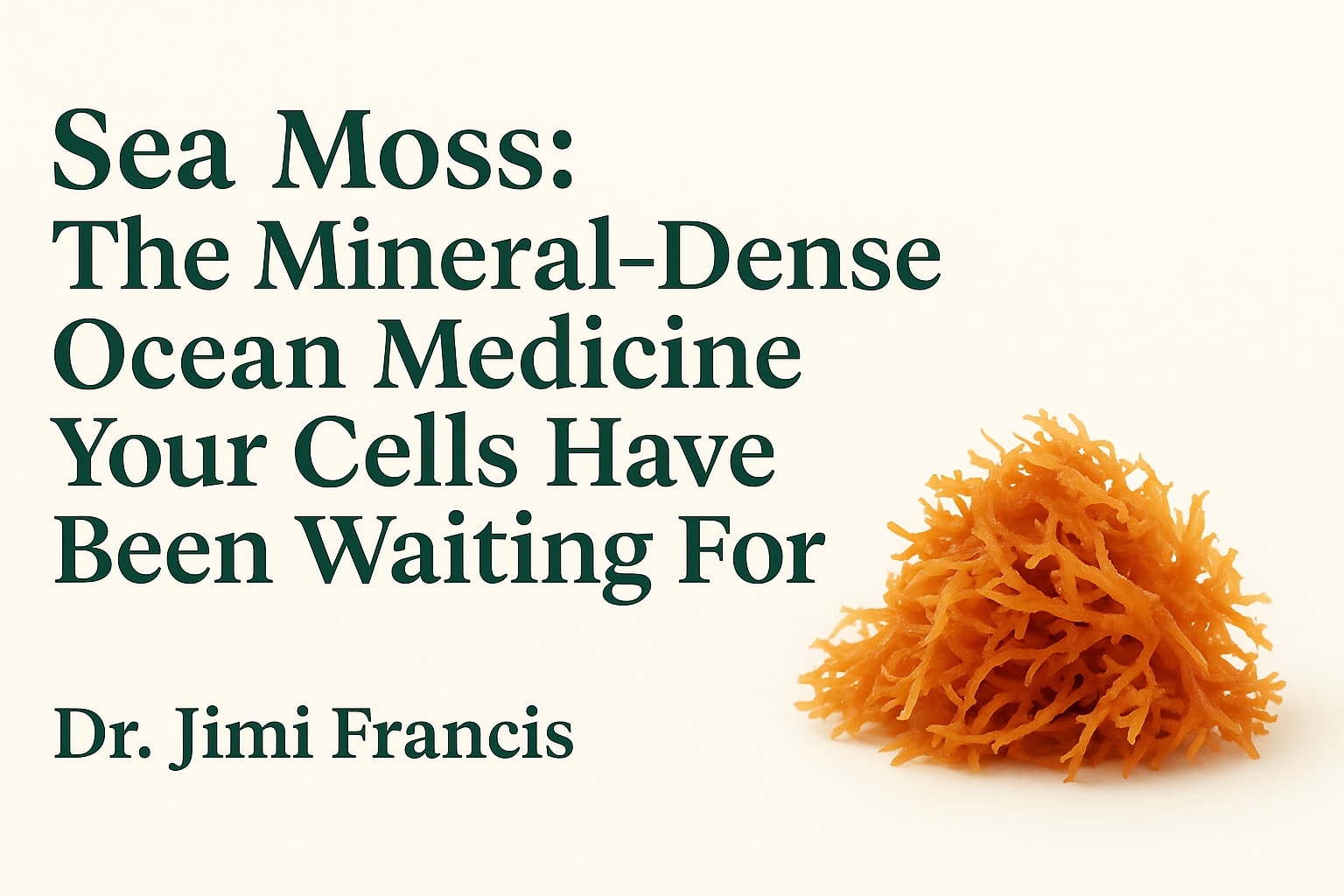
If you’ve been hanging around my corner of the internet for a while, you already know—I love foods that do something. Foods that not only nourish but also restore, recalibrate, and amplify the way your body operates.
And sea moss? Oh, sea moss is one of those quiet powerhouses.
This ocean-grown superfood is a treasure chest of essential minerals, vitamins, and antioxidants—nutrients most modern diets consistently fall short on. Think of sea moss as a nutritional charge cable for your biology… plugging in where depletion has slowly crept in.
Today, I’m giving you the big-picture overview. (I’ll be doing deep-dive posts on each nutrient later.)
The Nutrient Profile of Sea Moss: Why Your Cells Love It
Sea moss is one of the most mineral-dense foods on the planet. That’s not marketing hype—that’s biochemistry.
1. Mineral Mastery
Modern soil is depleted. Our food reflects that. Which is why sea moss is such a gift—it pulls minerals directly from ocean water.
Key minerals include:
-
Iodine – foundational for thyroid hormone production and metabolic vitality
-
Magnesium – the great regulator for nerves, muscles, blood sugar, and blood pressure
-
Calcium + Potassium + Phosphorus + Zinc – essential for bone health, fluid balance, immunity, enzyme function, and cell repair
These are minerals many of us are running low on without knowing.
2. Vitamins That Fuel Function
Sea moss also delivers a spectrum of vitamins:
-
Vitamin A for vision, skin, and immune intelligence
-
Vitamin C for collagen production and antioxidant strength
-
Vitamin E for cellular protection
-
B vitamins (B2, B9) for energy metabolism and red blood cell renewal
This is foundational nourishment for mitochondria—your energy-making engines.
3. Antioxidants for Cellular Protection
Sea moss contains polyphenols and flavonoids—plant compounds that combat oxidative stress and dampen inflammation.
Translation: they help shield you from the wear-and-tear associated with aging and chronic disease.
4. Gut-Loving Soluble Fiber
One of sea moss’s superpowers is its soluble fiber content, which:
-
feeds beneficial gut bacteria
-
supports smoother digestion
-
slows glucose absorption
-
increases satiety and appetite control
Your microbiome will thank you.
5. Bonus: Amino Acids, Including Taurine
While not a protein superstar, sea moss does provide small amounts of amino acids. Taurine, in particular, supports cardiovascular and muscular function.
Potential Benefits of Sea Moss
1. Thyroid Support
Thanks to naturally occurring iodine, sea moss helps support balanced thyroid hormone production—key for metabolism, temperature regulation, and energy.
2. Immune Resilience
With its blend of minerals, vitamins, and antioxidants, sea moss helps fortify the immune system, especially during high-stress or seasonal transition periods.
3. Skin Hydration + Collagen Support
Sea moss is famous in skincare for a reason.
Its gel-like polysaccharides help:
-
hydrate the skin
-
soothe irritation
-
support collagen maintenance
-
promote a healthy glow
Internal + external use = synergy.
4. Digestive Harmony
Fiber-rich sea moss acts as a gentle prebiotic source, supporting microbial diversity—a cornerstone of overall health.
5. Appetite and Weight Balance
Thanks to its ability to promote satiety and stabilize blood sugar, sea moss can be a helpful tool for weight management strategies.
How to Add Sea Moss to Your Routine (Without Overthinking It)
Sea moss comes in raw, powdered, or gel forms. The gel is the most user-friendly and versatile.
Simple Ways to Use It:
-
Make sea moss gel: Blend soaked raw sea moss with water until smooth. Refrigerate.
-
Smoothies: Add 1 tablespoon of gel for nutrients and creaminess.
-
Soups + Stews: Stir in for thickness and mineral enrichment.
-
Sauces + Dressings: Creates a silky texture while boosting nutrition.
-
Straight up: A spoonful a day works too—start small and see how you feel.
Remember: food synergy matters. Sea moss elevates your diet, but it does not replace a balanced, nutrient-rich foundation.
Sea moss is more than a trend—it’s an ancient, nutrient-dense sea vegetable with real potential to support your thyroid, your gut, your immune system, and your cellular vitality.
But—important note—because of its iodine content and its impact on hormones, it’s essential to consult with a Registered Dietitian Nutritionist (RDN) or a qualified functional provider before adding it consistently to your routine, especially if you have:
-
thyroid conditions
-
autoimmune disease
-
pregnancy or lactation considerations
-
or you are taking certain medications
Your body is unique. Nutrition should be too.
So go ahead—explore the nutritional magic of sea moss. Your cells might just thank you for the upgrade.