
If you’ve ever had a toddler in daycare, you’ve probably heard whispers of “Hand, Foot, and Mouth Disease” traveling through classrooms like a tiny viral parade. And while we often think of HFMD as a childhood illness, I meet plenty of mothers — especially breastfeeding mothers — who end up catching it from their little ones.
So let’s take a moment to talk about what HFMD looks like in adults, what it means for breastfeeding, and how to get through it with as much comfort and confidence as possible.
Yes, Breastfeeding Mothers Can Get HFMD
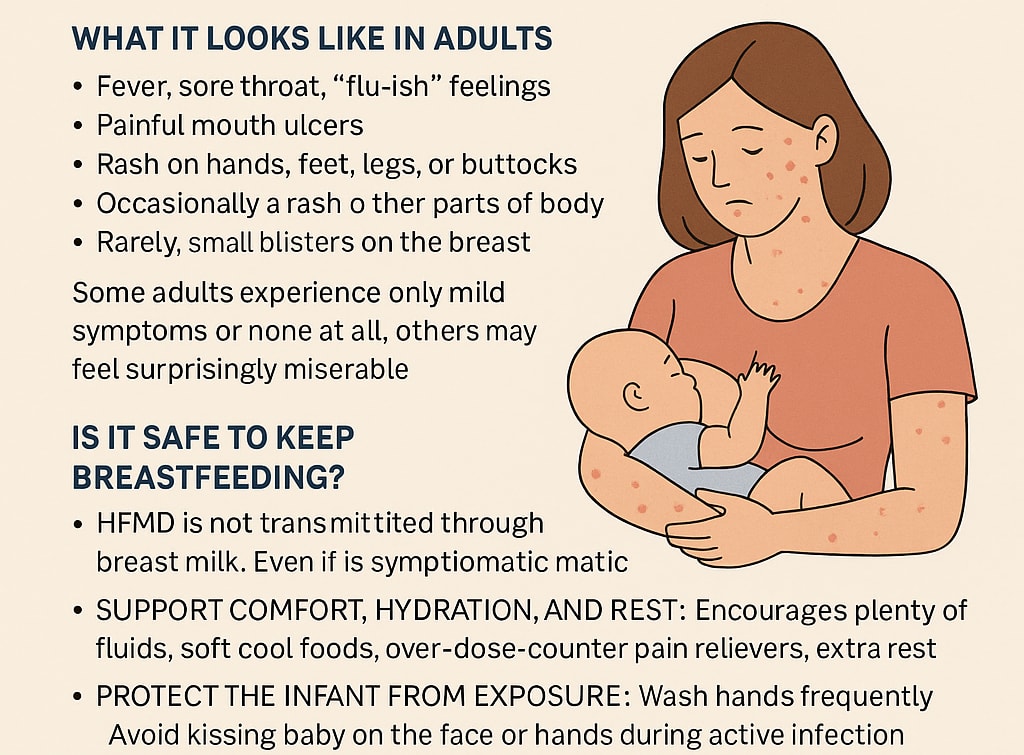
This illness is caused by Coxsackievirus, a member of the enterovirus family. In adults, HFMD is usually mild, but I won’t sugarcoat it — some mothers feel surprisingly crummy for a few days. Adults tend to show:
-
A low-grade fever and that “flu-ish” heaviness
-
Painful mouth ulcers that make eating uncomfortable
-
A rash or small blisters on hands, feet, legs, or buttocks
-
Occasionally a rash elsewhere
-
Rarely, tiny blisters on the breast
Some women barely notice symptoms. Others feel knocked flat. Both are normal responses.
The important thing to remember is this: breast milk remains safe, protective, and healing throughout the illness.
Should You Keep Breastfeeding? Absolutely.
HFMD does not pass through breast milk. In fact, your immune system immediately begins producing antibodies that flow directly into your milk, giving your baby natural protection or significantly softening the illness if they do catch it.
I often tell mothers:
Your body is doing double duty — healing you and protecting your baby.
What Helps the Most
HFMD can make you feel like you’ve hit a wall. Here’s what supports your recovery and keeps breastfeeding manageable:
1. Hydration and Gentle Nourishment
Mouth ulcers can make meals uncomfortable. Cool foods, smoothies, popsicles, and broths are often easier. Take pain relievers as needed and compatible with breastfeeding.
2. Keep Nursing — or Pump if a Breast Lesion Is Tender
Most women can breastfeed normally even if a few blisters appear on the breast. If one spot is too painful, pump that side and keep the milk — it’s still perfectly safe.
Watch the area for signs of secondary infection, especially if scratching or friction irritates the skin.
3. Reduce Exposure Risk to Baby and Family
HFMD spreads through:
-
Drool
-
Respiratory droplets
-
Stool
-
Fluid from blisters
So the real prevention strategy is good hygiene:
-
Wash hands after diaper changes, wiping noses, using the bathroom
-
Avoid kissing baby’s hands or face during active mouth sores
-
Cover blisters on hands or arms with a light, breathable bandage
-
Clean high-touch surfaces daily
You don’t need to isolate yourself — just be mindful.
4. Know When to Call
Reach out to a clinician if:
-
You’re unable to stay hydrated
-
Fever lasts more than 3 days
-
Breast lesions look infected
-
A young infant (especially <3 months) becomes symptomatic
The Bottom Line
Hand, Foot, and Mouth Disease is inconvenient, uncomfortable, and sometimes a little dramatic-looking — but it’s temporary. With continued breastfeeding, supportive care, and good hygiene, most mothers recover quickly. And your milk gives your baby an irreplaceable layer of immune protection during the process.