
Parents often bring me their worried questions about “that rash” on their child’s cheeks, arms, or behind the knees. And I get it — red spots on a baby can stir up anxiety fast. Two of the most common culprits are eczema and impetigo, and while they can look similar at first glance, they’re very different conditions with very different needs.
Let’s walk through them together, in plain language, so you can confidently spot what’s going on and take the next gentle step forward.
Eczema: The Sensitive Skin Story
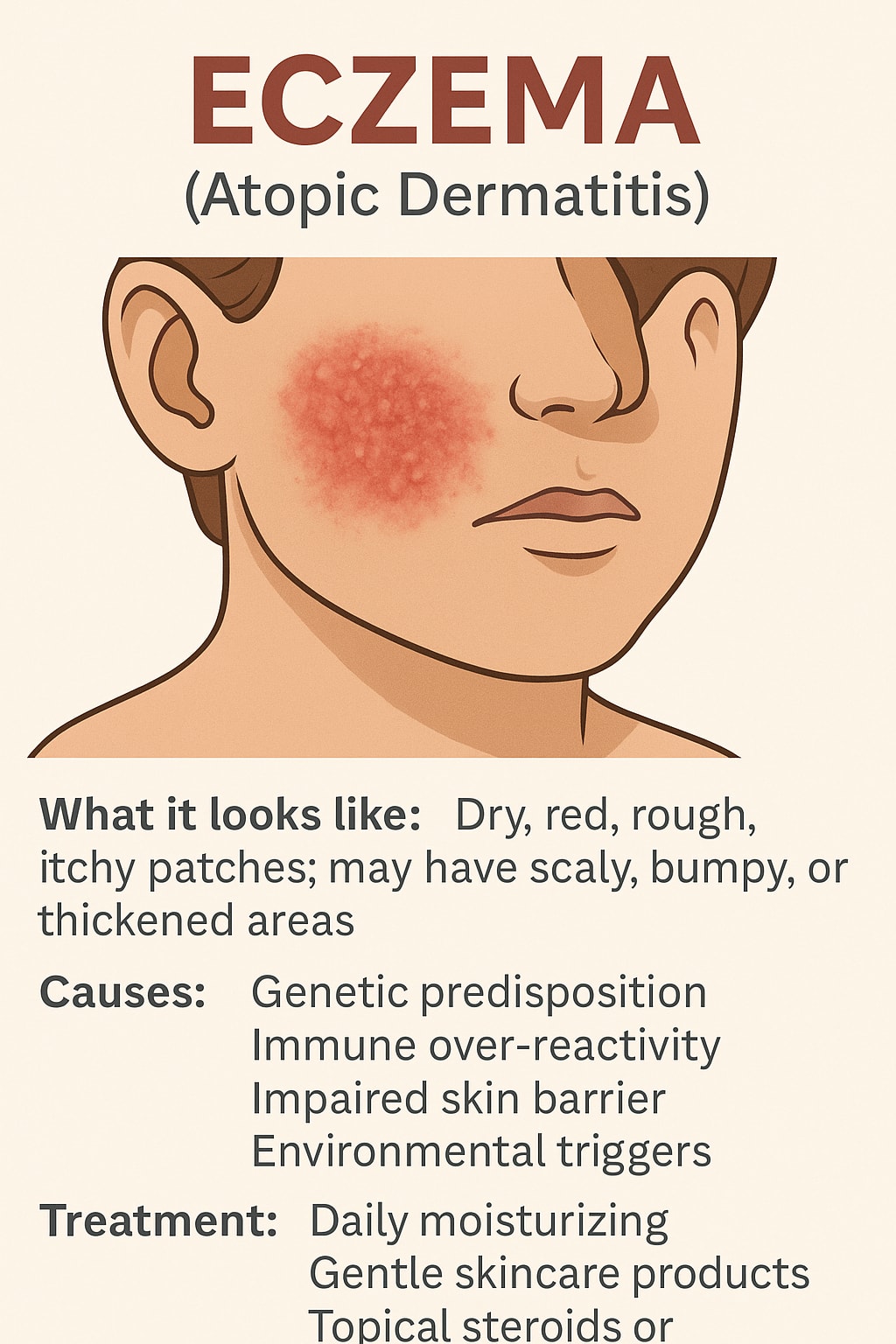
Eczema — or atopic dermatitis — is the skin’s version of a highly sensitive temperament. These kiddos have a skin barrier that simply needs more protection and more moisture. When it doesn’t get that, it shows you through dry, rough, itchy patches that flare with weather, soaps, allergens, or a busy week with poor sleep.
Eczema is not contagious. It’s rooted in genetics, immune sensitivity, and a skin barrier that needs extra love.
What helps:
-
Thick, daily moisturizers (think ointments and creams, not lotions)
-
Lukewarm baths and fragrance-free skincare
-
Reducing environmental triggers
-
Short-term use of topical anti-inflammatory medications when needed
Eczema isn’t a sign of “bad skin care” or “something you did wrong.” It’s just sensitive skin asking for support.
Impetigo: When Bacteria Take Advantage
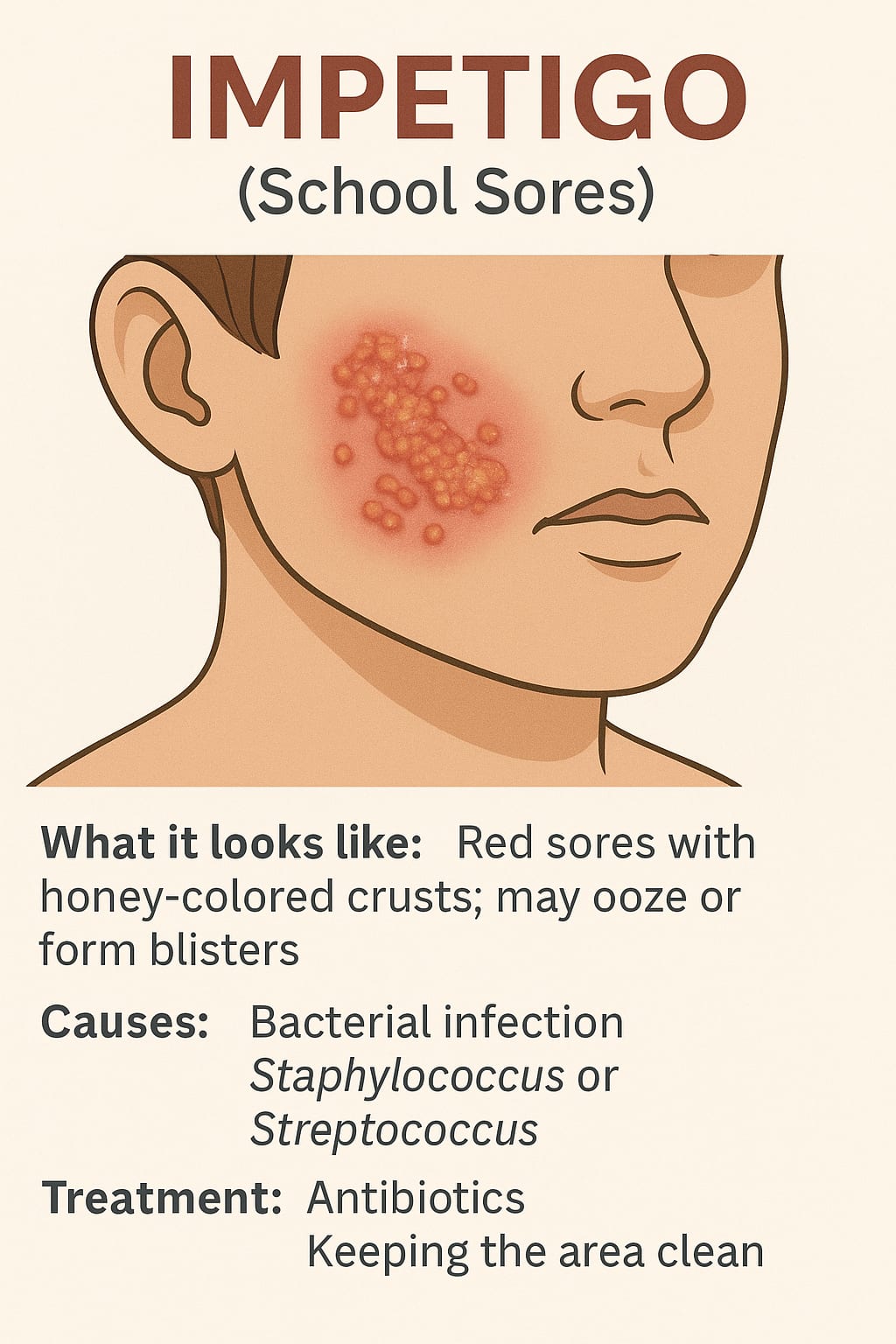
Impetigo, on the other hand, is a bacterial infection — usually Staph or Strep — that loves to sneak in through any tiny break in the skin. Those spots often appear as honey-colored crusts, small blisters, or oozing patches. And unlike eczema, impetigo is contagious, which is why we often see it sweep through daycare classrooms.
It can show up on its own, but it also loves to settle into eczema patches when a child’s been scratching.
What helps:
-
Topical or oral antibiotics, depending on severity
-
Gentle cleansing with warm water
-
Keeping nails short and avoiding scratching
-
Staying home from school/daycare during the first 24 hours of treatment
Impetigo is short-lived with proper treatment — it resolves beautifully when the underlying infection is addressed.
The Real-World Distinction
Here’s how I explain it to families in the clinic:
-
Eczema is dry, itchy, chronic, and never contagious.
-
Impetigo is wet, crusty, sudden, and very contagious.
And yes — they can overlap. Eczema that becomes infected will suddenly look wetter, redder, and crustier. When that happens, we treat both the infection and the underlying sensitive skin.
Why This Matters
When you understand what you’re seeing, you can respond appropriately. It helps reduce fear, avoid unnecessary antibiotics, and catch infections early when they arise. Most importantly, calm confidence can make a big difference in healing.