Every week I talk with families who quietly ask the same question:
“Will my medication hurt my baby?”
Usually, the medication is an antidepressant—most often a selective serotonin reuptake inhibitor (SSRI). Sometimes the mother has already stopped taking it because she feels guilty. Sometimes her family has encouraged her to stop. Occasionally she has received conflicting advice from healthcare providers.
My response is almost always the same:
The greatest risk is often not the medication: it is untreated maternal depression or anxiety.
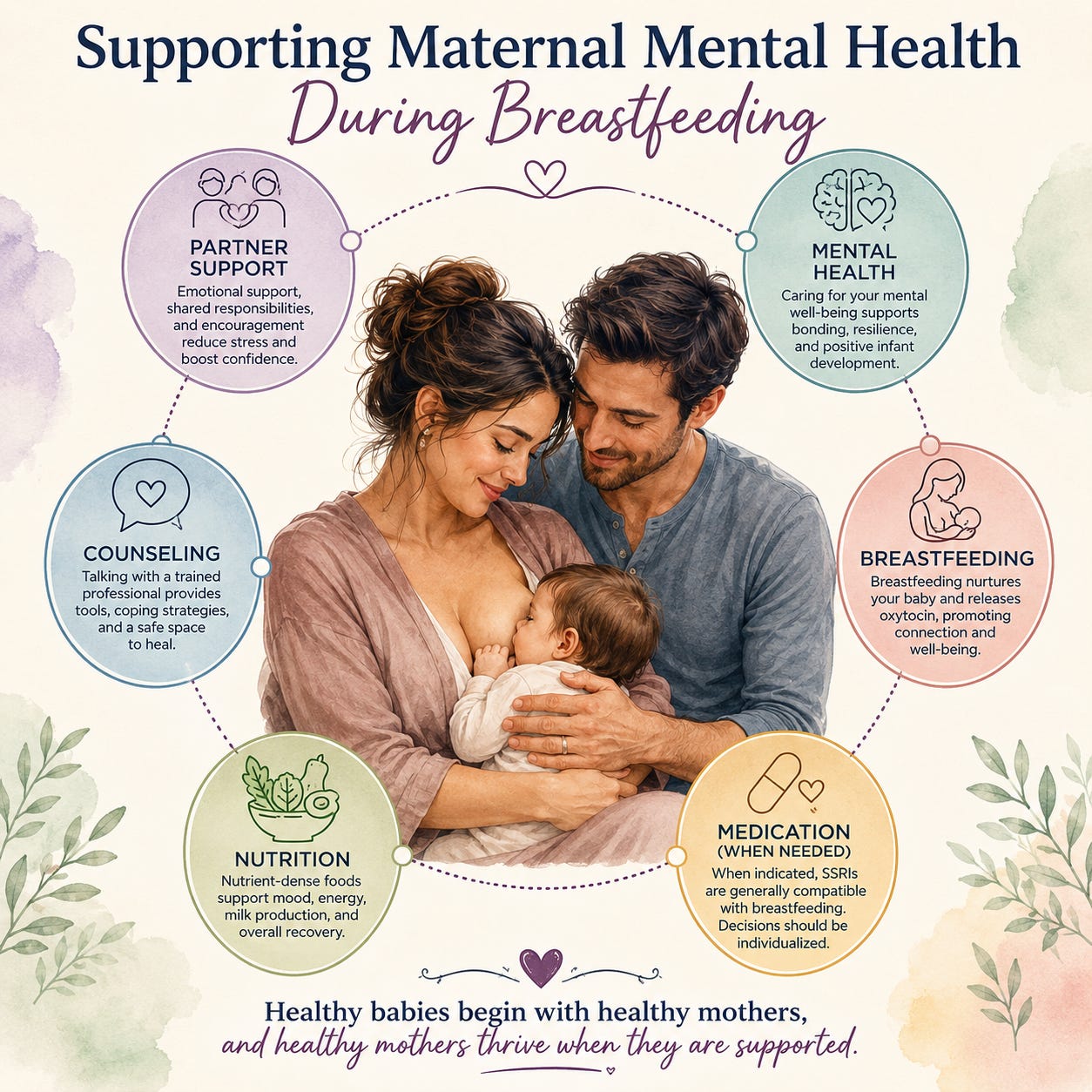
When we talk about breastfeeding, we naturally focus on protecting babies. But healthy babies need healthy mothers. Maternal mental health is not separate from infant health; it is one of its foundations.
Depression Doesn’t Pause Because a Baby Arrives
The postpartum period is one of the highest-risk times in a woman’s life for depression and anxiety disorders. Hormonal changes, sleep deprivation, physical recovery, financial stress, and the overwhelming responsibility of caring for a newborn create the perfect storm for emotional illness.
Postpartum depression affects approximately one in seven mothers, while anxiety disorders may be even more common. Untreated depression is associated with:
· Reduced breastfeeding initiation and duration
· Difficulty responding to infant feeding cues
· Lower maternal confidence
· Impaired bonding
· Increased family stress
· Delayed infant cognitive and emotional development
· Higher risk of maternal self-harm in severe cases
As a lactation consultant and nutritionist, I have seen firsthand that mothers who feel emotionally supported often breastfeed longer and enjoy the experience more. Mental health treatment is not a barrier to successful breastfeeding—it is frequently what makes breastfeeding possible.
Fathers Matter More Than We Often Acknowledge
While much of the conversation surrounding the postpartum period focuses, appropriately, on the mother and baby, we sometimes overlook another critical member of the family: the father or supportive partner. Research consistently demonstrates that an engaged, emotionally supportive partner contributes to better outcomes for both mother and infant. Fathers who participate in skin-to-skin contact, respond to infant cues, assist with household responsibilities, protect the mother’s rest, and actively support breastfeeding create an environment where both maternal recovery and infant development can flourish.