
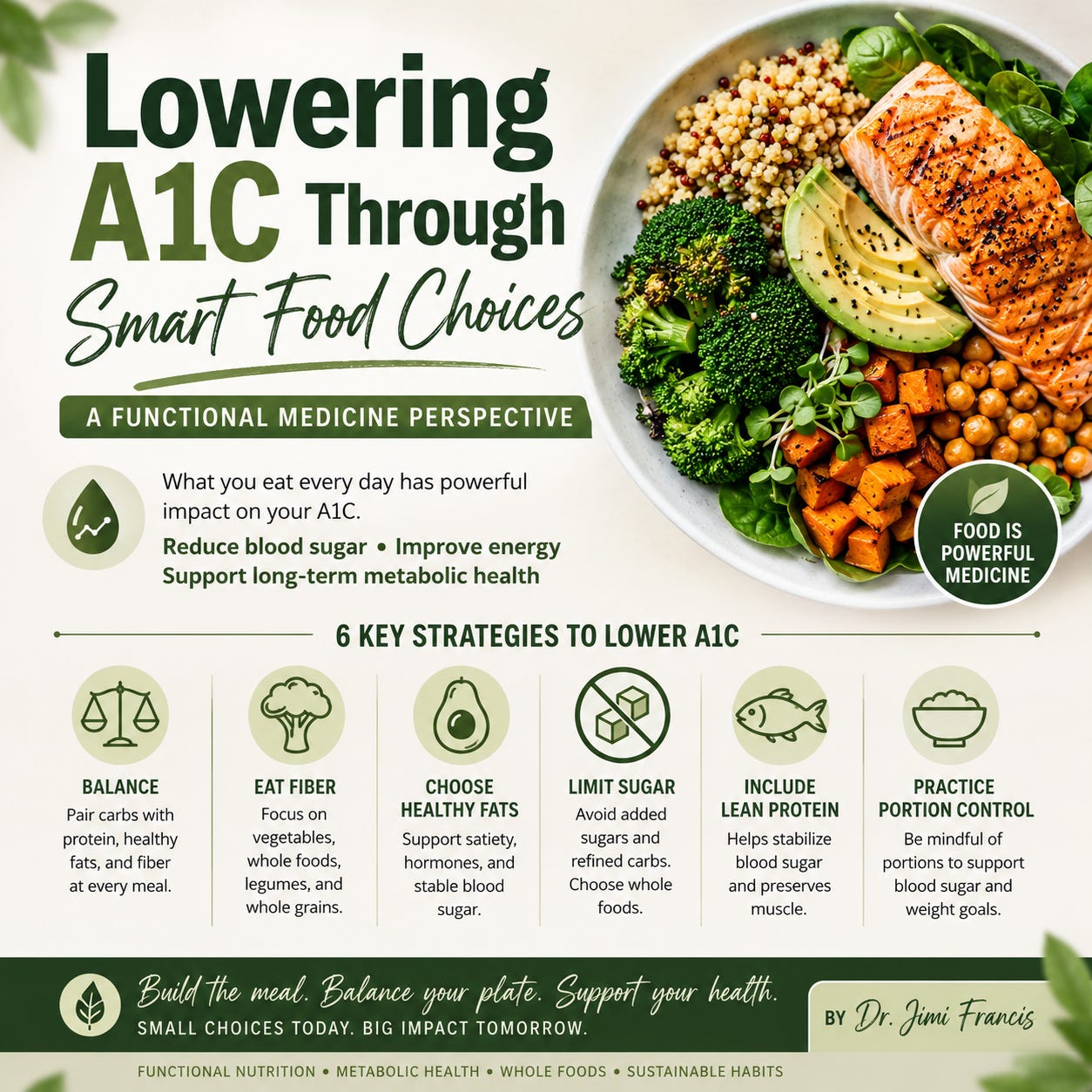
A1C gives us a window into average blood glucose exposure over roughly the previous 2–3 months. It is an important marker, but it is not the whole story. Daily glucose patterns are shaped by food quality, meal composition, movement, sleep, stress, medications, and individual physiology. The goal is not to create a “perfect” diet. The goal is to build a food routine that supports steadier glucose, adequate nourishment, and habits that can be sustained over time.
Educational material only. Nutrition and medication decisions should be individualized with the patient’s healthcare team.
Start With the Whole Eating Pattern
Blood glucose is influenced not simply by whether a food contains carbohydrate, but by the type and amount of carbohydrate, how processed the food is, what it is eaten with, and the person’s metabolic response. A bowl of refined cereal and a bowl of steel-cut oats with berries, chia seeds, and Greek yogurt may contain carbohydrate, but they do not create the same nutritional or metabolic experience.
Current diabetes nutrition guidance emphasizes individualized, nutrient-dense eating patterns rather than one prescribed macronutrient formula. A practical foundation includes non-starchy vegetables, whole fruits, legumes, minimally processed whole grains, lean and plant proteins, nuts and seeds, and unsaturated fats while reducing sugar-sweetened beverages, refined grains, and highly processed foods.
Clinical Pearl: Think “build the meal,” not “remove the carbohydrate.” Pair a quality carbohydrate with protein, fiber, and an appropriate source of fat. This changes the meal from a single nutrient event into a more balanced metabolic signal.
Six Food Strategies for Better Glycemic Control
1. Build a Balanced Meal or Snack
Rather than eating carbohydrate by itself, build meals around a combination of protein, fiber-rich carbohydrate, non-starchy vegetables when appropriate, and unsaturated fat. Mixed meals can alter the timing and magnitude of the post-meal glucose response, while protein and fat can improve satiety. For people who use mealtime insulin, remember that fat and protein may also influence later postprandial glucose; insulin decisions should follow the individualized diabetes care plan.
· Breakfast: oatmeal + berries + chia or ground flax + Greek yogurt or eggs.
· Lunch: lentil or quinoa bowl + vegetables + chicken, tofu, or beans + olive-oil dressing.
· Snack: apple or pear + nut butter; vegetables + hummus; plain yogurt + berries and nuts.
· Dinner: half the plate non-starchy vegetables, one-quarter protein, and one-quarter high-fiber starch or whole grain.