One of the most common questions I hear when discussing nutrigenomics is:
“If my genes show increased risk, does that mean I’m destined to develop that condition?”
My answer is always the same. “Genetics may predispose us to dis-ease, but it is our lifestyle choices that write the story.”
Genes provide a blueprint. They do not determine the final outcome.
In functional nutrition, we often talk about genetics as the “loaded gun,” but lifestyle is what determines whether the trigger is ever pulled. Every meal, every walk, every night of sleep, every decision to nourish rather than deplete ourselves sends signals to our genes.
Recently, I had the opportunity to review the nutrigenomic profile of a remarkable woman in her early seventies. Her story serves as a powerful reminder of what is possible when we focus on supporting the body consistently over time.
The Genetic Blueprint
Her genetic report contained several gene variants commonly associated with:
· Weight gain and difficulty losing weight
· Increased inflammation
· Reduced antioxidant defenses
· Cardiovascular risk
· Thyroid dysfunction
· Impaired detoxification pathways
· Reduced metabolic flexibility
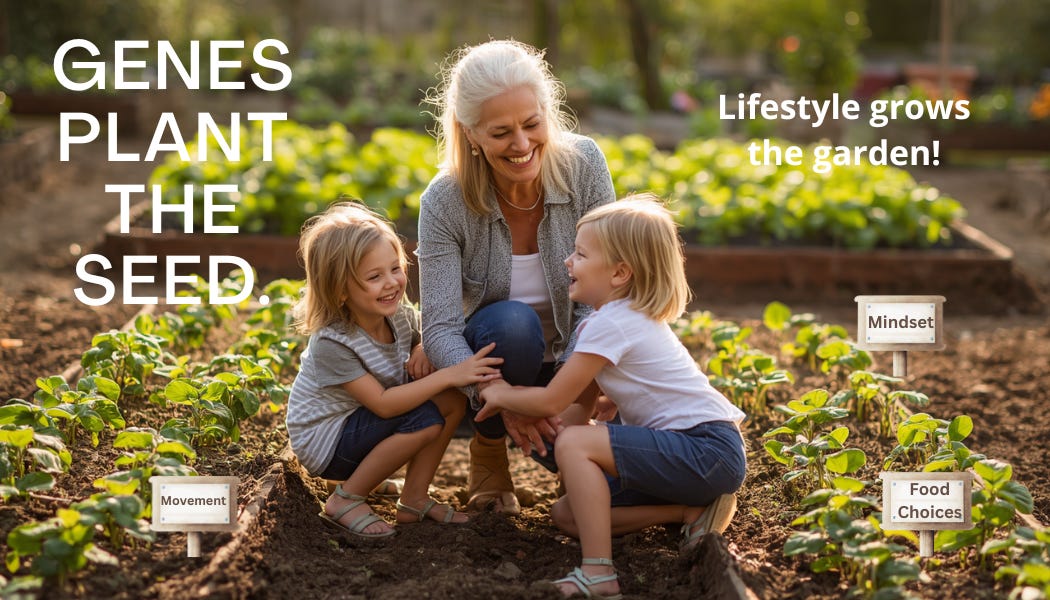
On paper, many practitioners might look at those findings and predict a future filled with diabetes, cardiovascular disease, obesity, and chronic illness. Yet that is not the garden she has planted for her self – her life tells a different story.
The Story She Actually Wrote
Past seventy years old, she remains active and engaged in daily life. She gardens. She continues to work. She plays with her grandchildren. She maintains meaningful relationships and an active social life. Most importantly, she is rarely ill, is not diabetic, and has normal blood pressure.
Her laboratory values tell an equally impressive story:
· Excellent insulin sensitivity
· Normal fasting insulin
· Favorable cholesterol levels; particularly HDL
· Stable blood sugar regulation
· No evidence of metabolic syndrome
Could her health be perfect? Of course not. She has Hashimoto thyroiditis. She has osteopenia. She has cataracts and some challenges with night vision. She occasionally experiences fatigue.
But when I step back and look at the whole person, I don’t see disease. I see resilience. I see vitality. I see successful aging. And I see the cumulative effects of decades of intentional self-care.
What Nutrigenomics Really Teaches Us
One of the greatest misconceptions about genetic testing is that it predicts your future. It doesn’t. Genetic testing identifies tendencies.
It helps explain why one person may need more support for thyroid function while another needs more support for blood sugar regulation. It helps us understand where vulnerabilities may exist. What it does not do is determine outcomes. Genes influence possibility. Lifestyle influences probability. The distinction matters.
This client’s report helps explain why she has likely had to work harder than some people to maintain her health. It helps explain why weight management may not come easily. It helps explain why thyroid disease developed and why supporting healthy aging requires ongoing attention. But it also demonstrates that biology is not fate.
The Power of Small Choices Repeated Over Time
This woman has taken targeted nutritional supplements for more than thirty years. She has consistently invested in her health. She has remained physically active. She has prioritized nourishing foods. She has continued learning and adapting as her body changed with age. None of these choices created dramatic overnight transformations. Instead, they created something far more powerful. They changed the trajectory of her health.
Many people underestimate the impact of small decisions because they don’t produce immediate results. A healthy breakfast doesn’t transform your health. Neither does one workout. Neither does one good night’s sleep. But thousands of healthy breakfasts, thousands of walks, thousands of nutrient-rich meals, and decades of caring for your body can profoundly alter the course of your life.
The Difference Between Lifespan and Healthspan
As a functional nutritionist, I am less interested in how long someone lives than in how well they live. This client illustrates that distinction beautifully. Healthspan refers to the years of life spent healthy, active, independent, and engaged. Past seventy years old, she continues to participate fully in the activities she loves. She remains connected to family. She enjoys movement. She contributes to her community. She maintains her independence. That is the goal. Not simply adding years to life, but adding life to years.
What About the Challenges?
Does nutrigenomics eliminate health challenges? Of course not. Aging happens. I, personally, am fighting it every step of the way. Life happens. Injuries occur. Genetics still matter. This client’s genetics likely contributed to some of the challenges she experiences today, including thyroid disease, cataracts, and osteopenia. But the presence of these conditions does not diminish the larger story. In fact, it highlights it. The goal was never perfection. The goal was resilience, to live our best life. The goal was creating a body capable of adapting, recovering, and thriving despite challenges. By that measure, she has succeeded extraordinarily well.
The Story You Are Writing Today
Perhaps the most important lesson from this case is that your current choices matter more than your current genetics. You may have inherited a tendency toward inflammation. You may have inherited a tendency toward diabetes. You may have inherited a tendency toward cardiovascular disease. But those tendencies are only one chapter. They are not the entire book. Every day you make choices that influence how your genes are expressed. Every meal provides information to your cells. Every walk, every workout, every moment of rest, every nourishing relationship, and every act of self-care becomes part of your story. The question is not: “What do my genes say about me?” The better question is: “What story am I writing with the choices I make today?”
Because while genetics may provide the blueprint, lifestyle choices are what build the structure. And that structure can be far stronger, healthier, and more resilient than the blueprint alone would ever predict.
Final Thoughts
One of the greatest privileges of my work is witnessing what happens when people consistently invest in their health over decades. This client’s story is not one of perfect genetics. It is a story of perseverance. It is a story of intentional choices. It is a story of healthy aging. Most of all, it is a reminder that while we cannot choose the genes we inherit, we can influence how those genes are expressed. The science of nutrigenomics is exciting because it helps us understand our unique biology. The wisdom of nutrigenomics is recognizing that biology is only part of the story. The rest of the story is written by us.
What story are you writing? What garden are you growing?